Upgrade the backyard with custom exposed aggregate concrete pavers.
Thank you to Quince for sponsoring this video! Elevate your wardrobe essentials with Quince. Download the Quince app for app-exclusive offers https://quince.yt.link/spYNnzC and get free shipping on your order and 365-day returns. #QuincePartner
All my woodworking plans https://ift.tt/qsY0mAb
🛠️ TOOLS & MATERIALS USED: (Affiliate Links)
• Mud Mixer (Concrete Mixer) https://ift.tt/EKIcLQT
• Concrete mixer: https://ift.tt/YMVAKE0
• 60lb Concrete Bags: https://ift.tt/KGOJh4g
• Hardboard (Make the form): https://ift.tt/nONHdLQ
• Wet grinder polisher: https://amzn.to/3VRpqp2
• 50-grit wet sanding disc: https://amzn.to/3VRpqp2
• Hand float: https://amzn.to/3TvQWHQ
• Trowel: https://amzn.to/4hOsSta
• Concrete broom: https://amzn.to/3TvQWHQ
• Table saw: https://amzn.to/3VRpqp2
• Circular saw https://amzn.to/3VRpqp2
👕 SPONSOR: Quince clothes I showed in the video
100% Organic Cotton Slub Short Sleeve Button Up Shirt: https://quince.yt.link/qpQLVrW
100% Organic Cotton Short Sleeve Oxford Shirt: https://quince.yt.link/sM1vnwC
100% European Linen Camp Shirt: https://quince.yt.link/euCCk5E
Stretch Wool Dress Pants - Straight: https://quince.yt.link/9ddaPo7
Organic Cotton Stretch Chino Pants - Straight: https://quince.yt.link/fvtjq5A
********** Support my work **********
My Woodworking Plans: https://ift.tt/qsY0mAb
Help me make more Video: https://ift.tt/pevi0cm
YouTube: Subscribe & "RING the Bell": http://bit.ly/1PtWJEd
Instagram: https://ift.tt/nmSTgK2
Pinterest: https://ift.tt/UXBgHvF
#DIYCreators #ConcretePavers #BackyardMakeover #DIYProject #Hardscaping #OutdoorLiving
from DIY Creators https://www.youtube.com/watch?v=NOVkxRTotM4

2026年9月24日星期四
I abandoned My Yard for 1,460 Days Now It's Unrecognizable
After 4 years of neglect, my patio vanished under a full blown jungle. In this video, I clear the chaos, reclaim the space, and rebuild it into a clean, modern, fire pit ready outdoor hangout
Previous Videos:
Making the square concrete pavers: https://youtu.be/lkBgjl7YsBc
Adding the LEDs to the pavers: https://youtu.be/wBBlE80TUO4
Products Featured (Affiliate links)
• Composite Adirondack Chairs: https://amzn.to/3TKvQWt
• Rectangular Fire Pit: https://amzn.to/4hczWzJ
• Propane Tank: https://ift.tt/tbDF8mN
• Heavy-Duty Cantilever Umbrella:
• Heavy-Duty Umbrella Base:
Materials List (Affiliate links)
• Weed barrier fabric - https://ift.tt/geToE4U
• Mulch - https://ift.tt/zvP32b5
• Pressure-treated 4x4
• Gravel
Tools (Affiliate links)
• Pressure washer - https://ift.tt/4xfh9EN
• Wheelbarrow - https://ift.tt/jWDvma9
• Drill
• Machete - https://ift.tt/QBJhKuw
• Shovel
• Rake
*******Quick Overview of the project *******
Step 1. Clear out the overgrown weeds and haul away the debris.
Step 2. Dig up, wash, and reuse the existing river rocks.
Step 3. Pour custom circular concrete stepping stones for a new pathway.
Step 4. Pressure wash the existing square pavers.
Step 5. Build a custom, buried wooden anchor for the heavy-duty umbrella base.
Step 6. Lay down new weed barrier and spread the mulch.
Step 7. Assemble the cantilever umbrella and folding composite Adirondack chairs.
Step 8. Set up the rectangular fire pit, bury the gas line, and fire it up!
********** Support my work *********
• All my woodworking plans https://ift.tt/QFBqbxZ
• Help me make more Video: https://ift.tt/y3C6ldI
• Instagram: https://ift.tt/a7slUDF
#backyardmakeover #patio #diy #landscaping
from DIY Creators https://www.youtube.com/watch?v=uK8xAvzVf5U
from DIY Creators https://www.youtube.com/watch?v=uK8xAvzVf5U
2026年8月25日星期二
Heavy Duty Bulk Pantry Bins for Cans
Why I Built These Bulk Pantry Bins
I wanted an open-front pantry bin that could handle the real weight of canned food while keeping labels easy to see. The raw photos show the actual bins I have used in my pantry for more than five years. They are heavy duty!
Why We Love These Bulk Bins
- Sized for standard cans to fit neatly
- Easily holds at least three dozen cans
- Low front makes cans easy to see and reach
- Heavy-duty 1x8 construction
- Bottom-mounted plywood makes a smooth, sturdy base that rests directly on a pantry shelf
- Easy to customize into a longer bin with dividers
Longer Widths
You can make the front, back, and plywood bottom longer to fit your shelf. For a longer bin, add a shaped 1x8 divider every 15-1/2 to 18 inches. The dividers organize different foods and keep the longer front, back, and bottom well supported.
Free Plans
Use the free step-by-step plans below to build the standard single bin, then use the customization notes for longer widths.
from Recent Project Plans https://ift.tt/S1Do3XQ
DIY Cabinet Tray Dividers
These tray dividers are intentionally built as separate modules instead of one fixed organizer. This makes the system easy to customize now and reposition later as your storage needs change.
Use a 1x3, 1x4 or 1x6 for the top and bottom boards depending on the desired width of each divider module. Before building, measure the cabinet opening carefully and check for hinges, face frames and other obstructions.
from Recent Project Plans https://ift.tt/zPWiCKY
2026年8月24日星期一
2026年8月19日星期三
48" Wall Shelf with Hooks - Built from Just 3 1x4 Boards
from Recent Project Plans https://ift.tt/bTOR72g
2026年8月18日星期二
One Board Personalized Backpack Hanger - Easy DIY Backpack Storage
Easy One Board Personalized Backpack Hanger
Give every kid their own designated spot for backpacks with this simple DIY backpack hanger. Each one is made from a 1x12 board, so there's very little cutting or assembly required.
Add a monogram, initial or name to personalize each backpack station, then install a sturdy hook below it. Make just one, or build several and hang them side-by-side to create an inexpensive backpack organization wall for the whole family.

Personalize Each Backpack Hanger
This is such a fun project to customize for each child. You can add a large wood letter, painted initial, vinyl name or other personalized detail to the upper portion of the board.
Keeping each backpack on its own board also gives bulky school bags more room than a traditional row of closely spaced hooks.

Add a Backpack Hook
Install a sturdy hook below the monogram or name. Center the hook on the board and position it low enough that the backpack has room to hang without covering the personalized area.
Backpacks can get surprisingly heavy when they're filled with books, water bottles and school supplies, so use a good-quality hook and screws.

Hang One for Each Kid
The best part about this project is that you can make as many as you need. Hang several personalized backpack holders side-by-side in an entryway, mudroom, hallway or homeschool area.
Since each hanger is its own separate piece, you can space them farther apart for larger backpacks or add another one later as your family's storage needs change.

How to Hang the Backpack Board
Because the backpack and everything inside it can be heavy, securely attach the 1x12 board to the wall. Whenever possible, drive mounting screws through the board and directly into wall studs.
Use a level to make sure the board is straight before tightening the screws. If you're making several backpack stations, use the first one as a reference so all of the boards are installed at the same height.
Tip: Leave plenty of space between each board so backpacks can hang naturally without overlapping.

from Recent Project Plans https://ift.tt/Z3iKJS9
Easy DIY Backpack Hanger from a 1x3 Board

This easy DIY backpack hanger is made from a single 1x3 board and a few hooks. The board mounts directly into two wall studs, creating a sturdy and inexpensive place to organize backpacks, lunch bags, coats, and sports gear.
Installing the rack lower on the wall makes it easier for children to hang up their own backpacks. It also leaves the wall space above available for a bulletin board, calendar, artwork, photos, or a family command center.
Why a Custom Backpack Rack Is a Must-Build DIY
Backpacks are much bulkier than coats, so most ready-made hook racks do not work very well for them. Store-bought racks are typically short and loaded with hooks placed close together. Once backpacks are added, the bags overlap, crowd each other, and quickly look cluttered.
This DIY backpack rack is designed specifically for backpacks. Instead of fitting as many hooks as possible onto a short board, it allows approximately 12 inches of space for each backpack. Every bag gets its own defined space, making the rack easier to use and much neater looking.
Because you are making the rack yourself, you can customize it for the exact number of people in your family:
- Choose the exact number of hooks you need.
- Give every backpack enough room to hang without overlapping.
- Install the hooks at a height your children can reach.
- Use single hooks or double hooks for backpacks and lunchboxes.
- Add names, initials, photos, a bulletin board, or a display ledge.
- Paint or stain the rack to match your home.
This is one of those simple projects that is often better to build than buy because the finished rack is tailored to your family, your backpacks, and your available wall space.
How Long Should a Backpack Hook Rack Be?
Allow approximately 12 inches of rack length for each backpack. The board should be at least 24 inches long so it can span two wall studs in a typically framed wall. Always locate the studs before choosing the final position and length.
- Two backpacks: Use a 24-inch board.
- Three backpacks: Use a 36-inch board.
- Four backpacks: Use a 48-inch board.
- Five backpacks: Use a 60-inch board.
The rack shown in this tutorial is made with a 36-inch 1x3 and three hooks.
Supplies
- 1x3 board, at least 24 inches long
- Handsaw or another saw suitable for cutting the board
- Backpack or coat hooks
- 3/4-inch screws for attaching the hooks
- Two 2-1/2-inch self-tapping star-drive screws for mounting the rack
- Drill and star-drive bit
- Stud finder
- Tape measure
- Level
- Pencil
- 120-grit sandpaper
- Paint or wood stain
- Paintbrush
- Wood filler
- Safety glasses
Important: Check the screws supplied with your hooks before using them. An actual 1x3 is approximately 3/4 inch thick, so the hook screws should not extend through the back of the board.

How to Make a Backpack Hanger from a 1x3 Board
Step 1: Measure and Cut the Board
Decide how many backpacks you want the rack to hold and allow approximately 12 inches of board length for each backpack. Do not make the board shorter than 24 inches, since it needs to reach at least two wall studs.
Measure the board and mark the finished length with a pencil. Put on safety glasses, support the board securely, and cut at the mark with a handsaw. You can also have the board cut to length at the lumber store.

Step 2: Sand and Clean the Board
Lightly sand the face, edges, ends, and corners of the board with 120-grit sandpaper. Smooth any rough areas and soften sharp edges without rounding them excessively.
Remove all sanding dust with a clean, lint-free cloth. If you use a slightly damp cloth, allow the wood to dry completely before applying the finish.

Step 3: Paint or Stain the Board
Paint or stain the front, edges, ends, and any visible portions of the back. Apply additional coats as needed, following the drying instructions for your finish.
Let the board dry completely before laying out and attaching the hooks. Installing hardware over soft paint can leave marks in the finish.

Step 4: Lay Out the Hooks
Place the hooks loosely on the board and decide how far apart you want them. Approximately 12 inches between hooks works well for most children’s backpacks. Measure every hook from the same reference point, preferably the center of the hook base.
For an odd number of hooks: Mark the exact center of the board and place the middle hook on that mark. Measure outward from the center by your chosen spacing for the remaining hooks.
For example, on a 36-inch board with three hooks spaced 12 inches apart, mark the hook centers at 6 inches, 18 inches, and 30 inches.
For an even number of hooks: Mark the center of the board, then divide your desired hook spacing by two. Measure that distance to both sides of the center to position the first two hooks. Continue measuring outward using the full spacing amount.
For example, if the hooks will be 12 inches apart, place the first pair 6 inches to either side of center, then continue outward in 12-inch increments.

Step 5: Attach the Hooks
Center each hook over its layout mark and make sure it is straight. Attach the hooks with the 3/4-inch screws.
If the screws are difficult to start, drill small pilot holes first. Do not overtighten the screws, since this can strip the wood or damage the hook finish.

Step 6: Find and Mark Two Wall Studs
Use a stud finder to locate two studs where you want to install the backpack rack. Mark the center of each stud with a pencil.
Wall studs are often spaced 16 inches on center, but spacing can vary. Verify both stud locations instead of relying on measurements alone. Also check for possible electrical wiring or plumbing before driving screws into the wall.

Step 7: Mark the Backpack Rack Height
A good starting point for younger children is to place the center of the board approximately 42 inches above the finished floor. For older children, approximately 48 inches may be more comfortable.
Before installing the rack, have your child reach toward the proposed hook height. The hooks should be easy to reach while leaving enough clearance for backpacks to hang without touching the floor. Hold the rack against the wall and mark the desired position.

Step 8: Drive the First Wall Screw
Hold the rack against the wall, aligning the board with the height mark and the first stud-center mark. Choose an open spot on the board that will not interfere with a hook.
Using a star-drive bit, drive one 2-1/2-inch self-tapping screw through the 1x3, through the drywall, and directly into the center of the wall stud. Stop when the screw head is slightly recessed into the wood. Do not drive it deeply enough to crush or split the board.

Step 9: Level the Rack and Add the Second Screw
The first screw will allow the board to pivot slightly. Place a level along the top edge of the rack and adjust the unsecured end until the bubble is centered.
Keep the rack level while driving the second 2-1/2-inch self-tapping screw through the board and into the center of the second stud. Check the rack with the level again before fully tightening the screws.

Step 10: Fill the Screw Holes and Touch Up the Paint
Apply wood filler over the two recessed mounting-screw heads. Allow the filler to dry according to the manufacturer’s instructions.
Lightly sand the filler until it is smooth and flush with the face of the board. Remove the sanding dust, then apply matching touch-up paint. Allow the paint to dry before hanging backpacks.

Backpack Rack Customization Ideas
One of the best reasons to build this project yourself is that you can customize the length, number of hooks, finish, and added features for your family.
Make a Longer Stained Backpack Rack
For a larger family, use a longer board and continue allowing approximately 12 inches for every backpack. This five-backpack version uses a 60-inch board with five evenly spaced hooks.
A stained wood finish adds warmth and makes the simple 1x3 look more like a finished piece of furniture.

Use a Wider Backboard with a Display Ledge
Another option is to use a wider board for the back of the rack and add a small ledge along the top. The ledge can support a lightweight bulletin board, framed artwork, family photos, or small decorative items.
This version gives the rack more visual weight and can help it function as part of a larger family command center.

Add a Narrow Ledge with a Second 1x3
To keep the project made entirely from 1x3 boards, add a second 1x3 flat along the top edge of the backpack rail. This creates a narrow 2-1/2-inch-deep ledge without making the rack bulky.
The ledge is just deep enough to hold a lightweight bulletin board, small frames, or children’s artwork. The vertical 1x3 remains the hook rail, while the second 1x3 forms the top shelf.

Add Initials or a Photo Above Each Hook
Give every child a designated spot by adding a name, initial, monogram, or small framed photo above each hook. This is especially helpful for larger families because children can immediately identify which backpack space belongs to them.
You can also add a small initial tag directly to each backpack for an extra personalized detail.

Use Double Hooks for Backpacks and Lunchboxes
If your children carry lunchboxes, choose double hooks instead of single hooks. Hang the backpack from the taller rear hook and the lunchbox from the shorter front hook.
This keeps each child’s school items together without adding more closely spaced hooks to the board. Be sure the lunchbox has a sturdy top handle that fits securely over the hook.
More Ways to Customize the Rack
- Paint the board the same color as the wall for a built-in look.
- Use black, brass, nickel, or colorful hooks to coordinate with the room.
- Add names or vinyl lettering directly above the hooks.
- Use a separate paint color for each child’s section.
- Install a bulletin board, calendar, or family schedule above the rack.
- Add extra length for coats, sports bags, or reusable shopping bags.
This simple wall-mounted backpack rack keeps bulky bags off the floor without crowding them together. Because the length and hook count are designed specifically for your family, it works better for backpacks than most ready-made hook rails.
from Recent Project Plans https://ift.tt/uxMTfSR
2026年8月11日星期二
2026年8月10日星期一
2026年8月9日星期日
2026年8月8日星期六

2026年8月7日星期五
2026年7月27日星期一
2026年7月25日星期六
Projects You Can Make with Framing Lumber and Screws
from Recent Project Plans https://ift.tt/ujIBx9P
2026年7月20日星期一
DIY Open Wardrobe Closet with Shelves – Free Plans
Why I Built this Project
My daughter moved to to a different room, and needed more closet space. So one day she came home with some lumber

And took over the shop for a couple of days ...

It turned out really awesome, super strong and sturdy and great freestanding - not flimsy at all!

This is a great closet for a dorm room, entryway, short term rental, or anywhere you need some extra hanging space without putting holes in the wall. She's using it in as a supplemental closet.
Free Plans to Build Freestanding Closet with Shelving
from Recent Project Plans https://ift.tt/I6HyfqT
2026年7月17日星期五
2026年7月15日星期三
2026年7月8日星期三
Homeschool Woodworking Guide for Alaska 2026/27 School Year
from Recent Project Plans https://ift.tt/ashdOkp
2026 Guide for Homeschooling Woodworking in Alaska: Funding, Coursework and More
from Recent Project Plans https://ift.tt/K7swJ2l
2026年7月7日星期二
Simple Small Trestle Desk - Free Build Plans!
design image is rendered from plans, actual results may vary
Why We Made this Desk
Do you need a simple, small desk for your kids, but don't want to pay a fortune for it?
I partnered up with my super amazing friend Brook from Being Brook (yes, she is really super amazing, I exaggerate not) to bring you a simple desk that you can make from 2x4s and 2x6s.

More Projects to Build!
The entire room features DIY projects. One of our favorites is the bed!

You can also build this bed with free plans and the X bench!
from Recent Project Plans https://ift.tt/gjfY1rz
Stack and Store Lap Desks
Design image is rendered from plans
Our children have been home from school for a month now. The papers, the books - it's everywhere. How to organize and make systems?
My friend has three school aged children in a very small A frame - so adding desks to the slanted walls would have been very difficult (or at the least, very space consuming). There's also not enough room to add three more desk chairs to her living room. She's been brainstorming ideas on how to create desks for the kids despite these challenges. Finally, we decided to try something creative.
Together we designed lap desks that stack up like a bookcase when not in use. Each child has their own lap desk, that holds all their supplies. When in use, simply flip over and it's a sturdy, perfect sized workspace. The lap desks are big enough for a child under five feet tall to sit with crossed legs.
We went simple with our lap desks - but though there could be so many creative ways that these little desks could be modified.
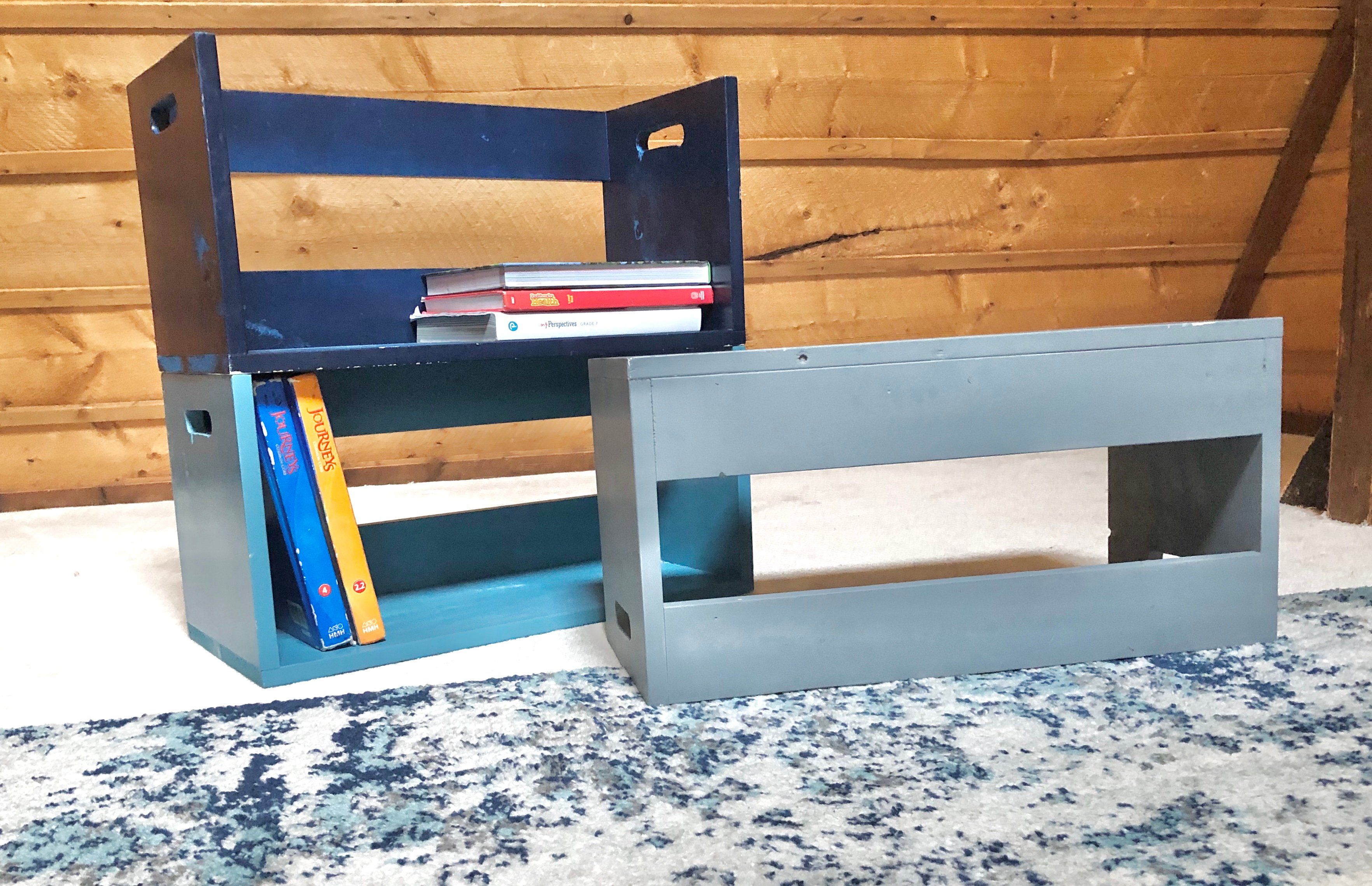
This was a very quick and easy build with barely any scraps left over. This is certainly a project that most any mom or dad could knock out in no time.
Here's the video of us building them:
I did change a few things up in the plans from the video, just to make it easier to build and easier to stack. The free plans follow. Please do share if you build, we love seeing your completed projects!
from Recent Project Plans https://ift.tt/NWSYiHk
U Shaped Table or Desk for School
design image is rendering
Why We Made this Plan
A favorite brag post on this blog has long been Jeff McClure's U shaped desk for his wife's kindergarten classroom.


From preschool teachers, to homeschooling parents, and even kindergarten teachers have asked for this plan.
We drew inspiration from Jeff's amazing design, but used 1x boards for the top as they tend to be smoother. We added a frame underneath to support the 1x boards.
Free Plans for U Shaped Desk
Thank you for using the plans, please send in photos when you build - we love seeing how your projects turn out!
from Recent Project Plans https://ift.tt/o7bKJt8
2026年6月23日星期二
Easy 6-Board Leopold Bench Free Plans with Cut List
from Recent Project Plans https://ift.tt/YfstNPD
Free DIY Around-the-Tree Bench Plans – Easy to Build and Customize
from Recent Project Plans https://ift.tt/eE7rKOR
2026年6月15日星期一
2026年6月9日星期二
Plywood and Lumber Storage System
Why I Built this Project
After years of not having a good plywood storage solution, and having to run to the hardware store every time I started a project,
Why We Love this PROJECT TITLE HERE
- Holds plywood of the ground and in a way that you can easily access it
- Holds lots of 8' long lumber
- You can store longer lumber at the top shelf
- You can build more dividers to go longer
- You can place shorter lumber pieces on top of the longer pieces
- Its fast and cheap to build
- Keeps everything off the floor, flat, and dry
How I Built this Project
Here's how this project is built -

You build three of these 2x4 things (for lack of better term). Each one only uses three 2x4x8 boards. Use 2-3/4" self tapping screws.

Then you attach those to the wall with screws. If you have baseboard, you'll need to either cut it out or work around it, or space the rack off the wall with spacers.
Free Plans to Build Your Own Lumber and Plywood Storage Rack
Ready to build this yourself? Here's the free plans, enjoy!
from Recent Project Plans https://ift.tt/NSqR3Qp
2026年5月12日星期二
Leaning Fishing Rod Rack
Why I Built this Project
We needed a simple solution for all the our fishing rods. We have many different lengths of fishing rods, from ice fishing rods to longer rods for bigger fish.I wanted to create a system that was compact and easy to use, fit all the different rods, without requiring expensive hardware or mounting on the wall.
I have been thinking on this for many weeks, and built a few prototypes. I discovered that placing the rods inside, with the handle extended down, created a self holding system with the fishing line pushing the rod out, holding the rods in place.
This system works well with rods with reels and lines. It may work with just rods or jut rods with reels, but not as well.
I ended up building two different versions - a tall version and a half height version.


Ultimately, I felt that a version in the middle of these two was the gather choice - three rungs high, but extend all the way to the ceiling so the rods could rest on something if they strayed right or left. This is done in the plans.
Why We Love this Fishing Rod Rack
- Holds many fishing rods of different sizes in a tiered design, so you get more storage in the same footprint
- Easy to set rods in place
- Great for different length rods
- Reels set on the inside to further protect
- Very easy to build and customize
- Leans against the wall - no holes in the wall
How I Built this Project
This was a very easy project to build - I used a compound miter saw to make all the board cuts.
Then I layed the legs out on a work surface (could be an even garage floor too)

Then lay out the 1x8 boards on top, and screw down with 1-3/4" self tapping star bit screws.

You could probably get away with a 1x6 board but I liked the 1x8s because it gives lots of room for the rod handle to land on the board.
Installation is simply leaning against the wall. Then just set the rods on it!
Watch! Build Video for This Project
VIDEO COMING SOON
Free Plans to Build Your Own Leaning Fishing Rod Rack
Ready to build this yourself? Here's the free plans, enjoy!
from Recent Project Plans https://ift.tt/9KmIZSc
2026年5月6日星期三
Easy DIY Floor Standing Headboard
Why I Built this Project
I wanted our guest room to feel like a fancy hotel room for our guests. So I built this headboard that is comfortable, easy to clean and creates a fabric texture to look more expensive, all on a super tight budget. I spent less than $100 on this huge headboard!
I also built the wood bed frame - the plans are free and here.
Why We Love this PROJECT TITLE HERE
- list features of why this project is so amazing here
How I Built this Project
(if applicable) photos showing how this project was built, so the reader can scroll through the photos without reading and understand how to build it
Watch! Build Video for This Project
if applicable, embed video here
Free Plans to Build Your Own DIY Floor Standing Upholstered Headboard
Ready to build this yourself? Here's the free plans, enjoy!
from Recent Project Plans https://ift.tt/auwhQ8T
2026年5月5日星期二
Modern Platform Bed Frame - Free Plans in All Sizes
Why I Built this Project
I needed a new guest room bed and wanted something that felt "hotel-lish" for our guest. I also never wanted to clean under the bed again. So I designed this bed with the enclosed base and hotel style look.
It was easy to build in the different pieces, move up to the room by myself and assemble. A king size bed is a big project. The way this bed comes together, it is do-able by one person.
Free Plans to Build Your Own Modern Platform Bed Frame (all sizes)
Ready to build this yourself? Here's the free plans, enjoy!
from Recent Project Plans https://ift.tt/TWouYMC
2026年4月27日星期一
Fence Picket Wood Gift Tote
Why I Built this Project
With Mother's Day coming up I wanted to create a unique way to give gifts for the mom's in my life. I saw this idea on Pinterest and thought it would be a great fence picket project, so this is what I came up with.
Why We Love this Wood Gift Tote
• Budget-friendly—made from fence picket scraps
• Great way to use up leftover wood
• Beginner-friendly build (simple cuts + basic tools)
• Quick project—perfect for last-minute gifting
• Uses minimal materials (just wood + rope!)
• Unique “handbag” design that instantly elevates any gift
• Doubles as the gift and the packaging
• Easy to customize size, shape, and finish
• Works for so many occasions (Mother’s Day, teacher gifts, housewarming, holidays)
• Reusable—becomes decor, storage, or a planter after gifting
• Lightweight and easy to carry with rope handles
• Perfect for styling—fill with flowers, treats, or themed goodies
How I Built this Project
Start by cutting and sanding your pieces. For the curve, make an outline of a round object and cut with a jigsaw. Use the first one as a template to trace before cutting the second one.


I then marked and drilled my holes and added the rope handles.

After that I nailed the end pieces in place.


Glue and nail the bottom piece. You can use a fence picket here, I opted for a scrap piece of plywood that I had on hand for a more low profile look.


Fill it with flowers or goodies!
Watch! Build Video for This Project
if applicable, embed video here
Free Plans to Build Your Own Fence Picket Gift Tote
Ready to build this yourself? Here's the free plans, enjoy!
from Recent Project Plans https://ift.tt/L9FvGsV
2026年4月14日星期二
Cedar Two-Tier Ladder Planter
Why I Built this Project
I wanted a small herb planter by my door that’s easy to reach without taking up much space. I didn’t need the full-size version, so this compact size is just right.
Why We Love this Two Tier Ladder Planter
- • Budget-friendly build using affordable, easy-to-find lumber
- • Easy to build with just basic tools
- • Simple design with straightforward cuts—great for beginners
- • Two tiers = more planting space without taking up extra footprint
- • Perfect for herbs, flowers, or even small garden starts
- • Easy to customize for your space—adjust the size, depth, or height
- • Finish it your way—paint, stain, or leave it natural for a cedar look
- • Adds instant charm to porches, patios, or entryways
- • Lightweight and easy to move around as needed
How I Built this Project
I started by cutting my 2x6 planter box ends.
 h
h
I then set them on their side, added glue and then nailed the fence pickets to the front and back of each end.


For the bottom piece, just set inside the box and gently tap into place. I put a couple of nails at each side to hold the bottom in place.

Once the boxes were done I built the legs. I just followed the cut list on the plan. Once I got my first leg cut I used it as a template to cut the second leg. Once both legs were cut I set them side by side and gave them a good sanding.


Once the legs are cut, finish the legs and boxes separately if you want a two-tone look. For assembly, mark the legs for placement, then screw the boxes in to maintain proper spacing. Keep each box flush with the back edge of the legs.


Watch! Build Video for This Project
Video coming soon!
Free Plans to Build Your Own Two Tier Leaning Planter
Ready to build this yourself? Here's the free plans, enjoy!
from Recent Project Plans https://ift.tt/7jnQch1
订阅:
博文 (Atom)